




Procedure duration
20 minutes
Visual result lasts
lifelong
Recovery
1 - 2 Days
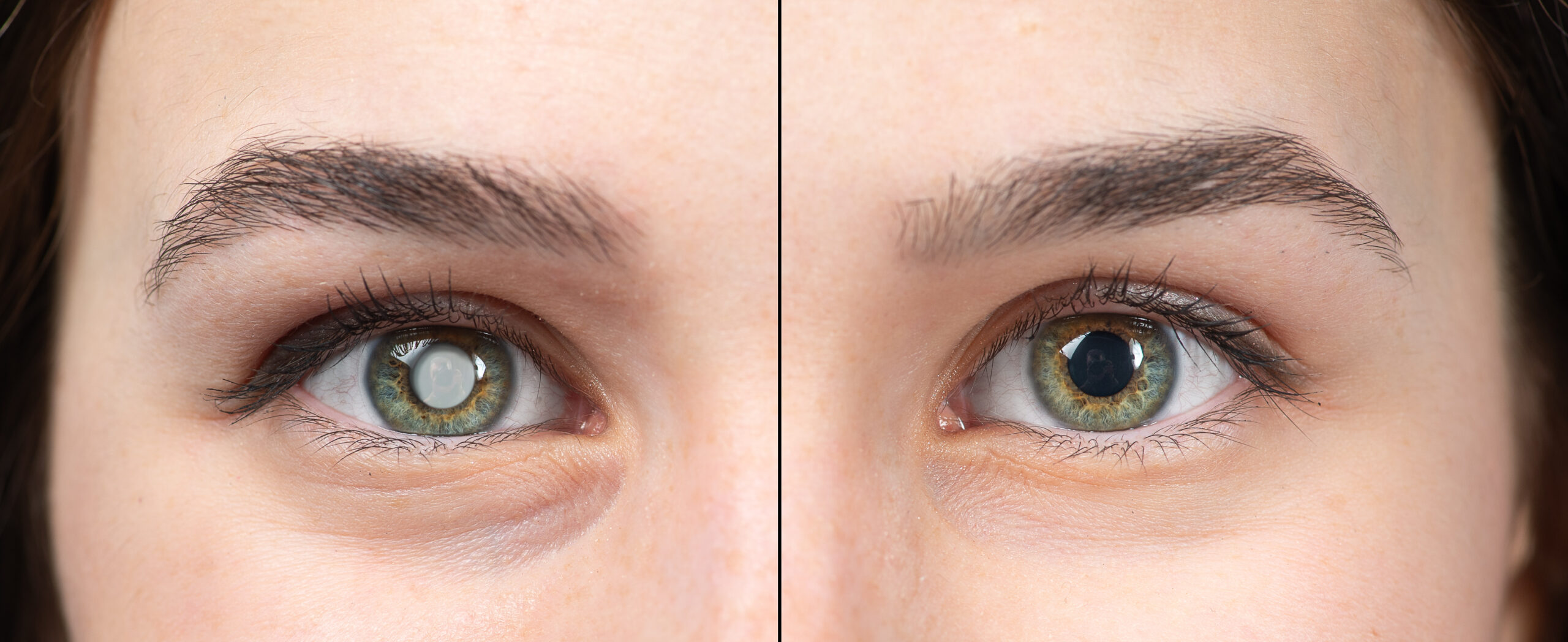
Every normal eye has an important structure within it called a lens that auto-focuses light for clear vision, similar to the lens of a digital camera. When the eye’s natural lens becomes damaged and cloudy, this autofocus function is lost and the lens is now referred to as a cataract.
Cataracts are most commonly caused by natural ageing, diabetes, radiation (including UV-sunlight), eye trauma, toxins (alcohol, smoking), a diet low in antioxidants (Vitamins A, C & E) and certain medications (steroid therapy). All these elements result in a drastic change to the protein structure of the natural crystalline lens. Genetics also plays a role in cataract development and genetic testing is available for people desiring to assess their cataract genetic risk profile.
People with cataracts frequently experience blurred/foggy vision, washed-out colours, double-vision and worse vision in dim light (reading menus in restaurants). These all interfere with daily activities such as reading, driving and recognising faces. Additionally,
driving at night may become difficult due to the blinding glare and haloes of oncoming car headlights.
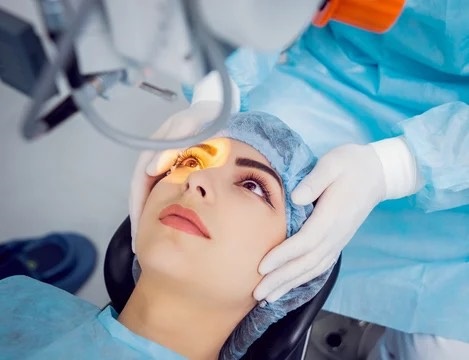
When a cataract is in its very early stages, spectacles or contact lenses may be a temporary solution. However, when a cataract becomes established, advanced cataract refractive surgery becomes a necessity. Cataract surgery is the most common eye surgery performed around the world. Cataract refractive surgery is a painless procedure performed with anaesthetic eyedrops and light sedation in a state-of-the art surgical theatre, lasting 20 minutes.
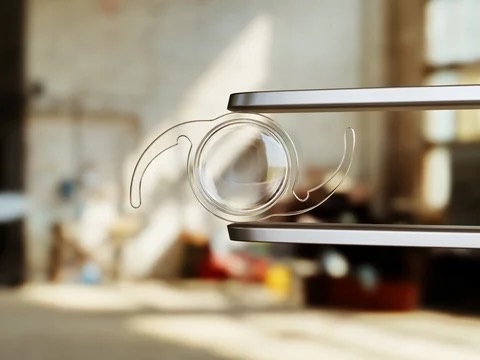
Dr Djan uses powerful operating microscopes for visualisation as he fashions 2 micro incisions in the eye. Your dysfunctional natural lens (cataract) is then vaporised with sophisticated ultrasonic technology and a new lens implant is inserted to replace it. This lens implant is smaller than the size of a contact lens and is designed to deliver pristine vision, restoring the integrity of the autofocus function.
All patients that have cataract refractive surgery will need a new lens implant to see clearly. There are 2 types of lens implants you can choose from to suit your vision goals and lifestyle, with each type having benefits and limitations.
Regardless of which implant you select, your vision will be improved after surgery. It is important that you read about each lens implant so that you are able to make an informed decision with Dr. Djan on the best lens implant technology for your eye. The lens implants are able to restore vision lost to cataracts, but are also able to correct pre-existing issues such as nearsightedness (myopia), farsightedness (hyperopia), astigmatism or presbyopia (age-related farsightedness).
Read about the 2 lens implant options below.
These multifocal lens implants are able to restore clear vision and also correct preexisting nearsightedness (myopia), farsightedness (hyperopia), astigmatism and presbyopia (age-related farsightedness). All advanced technology lenses require rigorous testing to ensure that the optics of your
eye are suitable. This lens implant does come at a higher cost because the technology in it gives you the highest chance of being spectacle-free after cataract surgery. This is a sound investment as the initial cost of this lens implant is easily off-set by the cost of having to renew spectacles every 2 years as recommended. Visual light phenomena (haloes, glare, starbursts) may occur early on with this advanced lens implant, but these are rarely bothersome & resolve over time as the brain continues to refine visual stimuli.
If you have regular astigmatism (oddly-shaped cornea) that is contributing to your blurred vision, it can be corrected at the time of
cataract surgery with a Toric lens implant. Dr. Djan will inform you if you have any regular astigmatism.
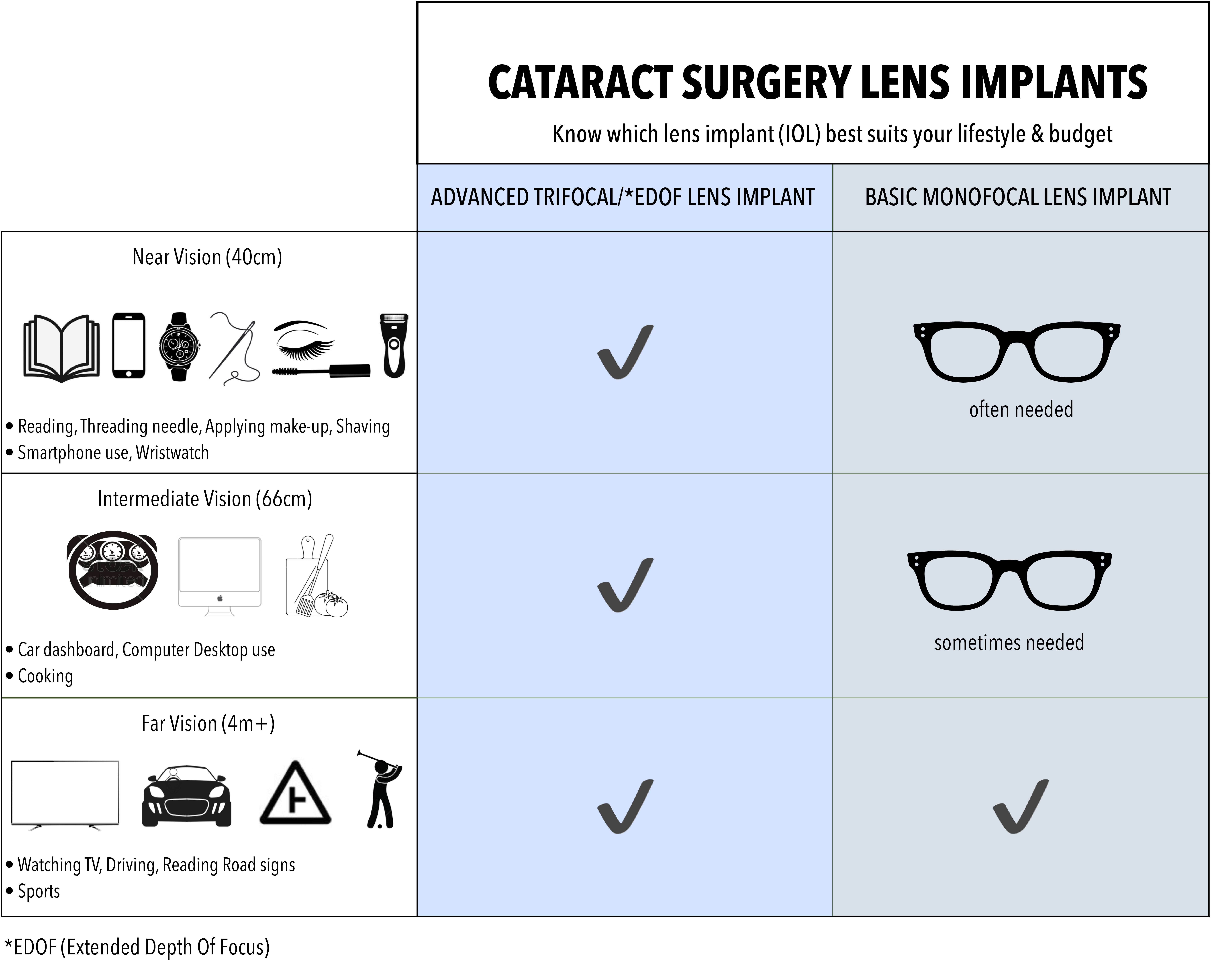
These basic lens implants do provide clear vision, but come at a moderate cost because they are somewhat limited in their ability to make you spectacle-free after cataract surgery. A Basic Monofocal Lens Implant (even with additional extended range of vision) can only focus in the distance or for near/reading, but it cannot do both simultaneously. Blended-Monovision is a technique that is sometimes employed where your dominant eye is corrected for distance vision and your other eye corrected for near reading. This approach may assist certain people in reducing their dependence on spectacles as the brain is able to shift vision seamlessly between the eyes for different activities.
Follow the lens implant questionnaire to guide your lens implant choice depending on the range of vision you desire and your lifestyle.
The average cost of a pair of entry-level multifocal prescription spectacles in South Africa in 2025 is R4500 [Includes eye test, frames, lenses, anti-reflective coating, blue-light protection]. These prescription multifocal spectacles will likely need to be replaced every 2 years. Spectacles are also prone to scratches, loss/theft, smudges and fogging (with mask wear). Although multifocal spectacles corrects a large spectrum of eye conditions, the convenience and vision quality provided by advanced technology lens implants are far superior and remain in the eye permanently.
Traditional cataract surgery initially involved 3 steps in restoring vision which were:
1. Extracting the cataract (damaged lens)
2. Replacing it with a standard (regular) lens implant
3. Prescribing a pair of spectacles.
Fortunately, we are now in the realm of Advanced cataract refractive surgery and advanced technology lens implants (IOLs). Advanced cataract refractive surgery coupled with a advanced technology lens implant means that the overwhelming majority of patients that opt for this are able to reduce/eliminate their use of spectacles altogether.
HOW DO I PREPARE FOR MY CATARACT REFRACTIVE SURGERY
Dr. Djan will discuss the cataract refractive surgery details during your consultation, including the various lens implant options [Advanced lens implants (Trifocal, EDOF, Toric) versus Basic lens implants (Monofocal)], the involved risks and what vision outcomes you can expect. You will then be required to select the lens implant which best suits your vision goals and lifestyle.
Following this, our bookings clerk will confirm your surgery date and time whilst assisting with all necessary medical aid authorisations/Gap cover administration.
WILL I NEED SPECTACLES/CONTACT LENSES AFTER CATARACT REFRACTIVE SURGERY
Your dependence on spectacles/contact lenses after surgery will depend on the type of lens implant you select for your cataract surgery. There are 2 broad categories of lens implants: [Advanced lens implants (Trifocal, EDOF, Toric) versus Basic lens implants
(Monofocal)].
Advanced technology lens implants [Trifocal lens implants, Extended depth of Focus (EDOF) lens implants, Toric lens implants] will radically reduce your need for spectacles/contact lenses or eliminate them altogether.
Basic Monofocal lens implants will mean that you will still likely need to wear spectacles/contact lenses for most activities after surgery.
DO CATARACTS GROW BACK AFTER SURGERY
No. Once you have had successful cataract surgery, the cataracts never recur. Occasionally epithelial cells from the cataract may collect on the posterior (back) surface of the new lens implant. This condition is simply remedied with a quick (5 minute), painless office-based laser procedure (Nd:YAG laser capsulotomy).
WHEN IS A GOOD TIME TO HAVE CATARACT SURGERY

Cataract surgery timing is usually subjective and people usually seek help when their vision quality starts to deteriorate.
Common cataract symptoms include blurred/foggy vision, washed-out colours, double-vision and worse vision in dim light (reading menus in restaurants, reading car dashboard gauge clusters). These all interfere with daily activities such as reading, driving and recognising faces. Additionally, driving at night may become difficult due to the blinding glare and haloes of oncoming car headlights.
HOW LONG DOES ADVANCED CATARACT REFRACTIVE SURGERY TAKE
Cataract refractive surgery usually takes 15-20 minutes to complete in an operating theatre. It is a performed as a day procedure, meaning a hospital admission/ overnight stay is not required.
HOW LONG DOES IT TAKE TO HEAL FROM ADVANCED CATARACT REFRACTIVE SURGERY
Most people find they can return to their usual level of activities within 3-5 days after having their surgery.
The vision refinement with the new lens implants and co-ordination with the vision centre in the brain continues subtly for approximately 4-6 weeks after cataract surgery. Driving is not recommended prior to 48 hours following cataract surgery. This brief period is to allow your eyes to adjust adequately.
WHAT ARE THE RISKS OF ADVANCED CATARACT REFRACTIVE SURGERY
Advanced Cataract refractive surgery is the most commonly performed eye surgery in the world due it’s excellent safety profile. It is performed in a state-of-the-art theatre under sterile conditions. Uncommon risks include dry eye syndrome, inflammation/infection, lens implant shifting, visual light phenomena (haloes, glare, starbursts) & retinal detachment/swelling.
CAN ADVANCED CATARACT SURGERY BE PERFORMED WITH A LASER
Advanced cataract refractive surgery involves a multitude of technologies including lasers and/or ultrasonic pulses. All these technologies may be used to assist with certain aspects of the surgery, but no one element can be used exclusively to perform this highly sophisticated surgery.
HOW DOES ADVANCED CATARACT REFRACTIVE SURGERY DIFFER FROM A REFRACTIVE LENS EXCHANGE
A Refractive lens exchange (RLE) procedure is almost identical to cataract refractive surgery, the only difference being the state of the natural crystalline lens to begin with. With a refractive lens exchange (RLE), the natural lens is clear in colour, but has weak focusing capabilities. With cataract refractive surgery, the natural crystalline lens is cloudy and dysfunctional. Both procedures require replacements of these defective natural lenses with advanced technology lens implants.
CAN I HAVE LASER PROCEDURES (LASIK/PRK/SMILE) AFTER CATARACT REFRACTIVE SURGERY
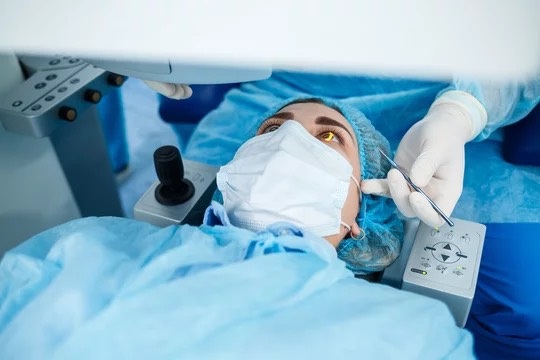
Yes, Laser refractive surgery (LASIK/PRK/SMILE) can still be performed after cataract surgery should it be required/desired.
However, the inverse is not true – LASIK/PRK/SMILE is not performed on an eye with an established cataract.
WHAT ARE HALOES, GLARE AND STARBURSTS
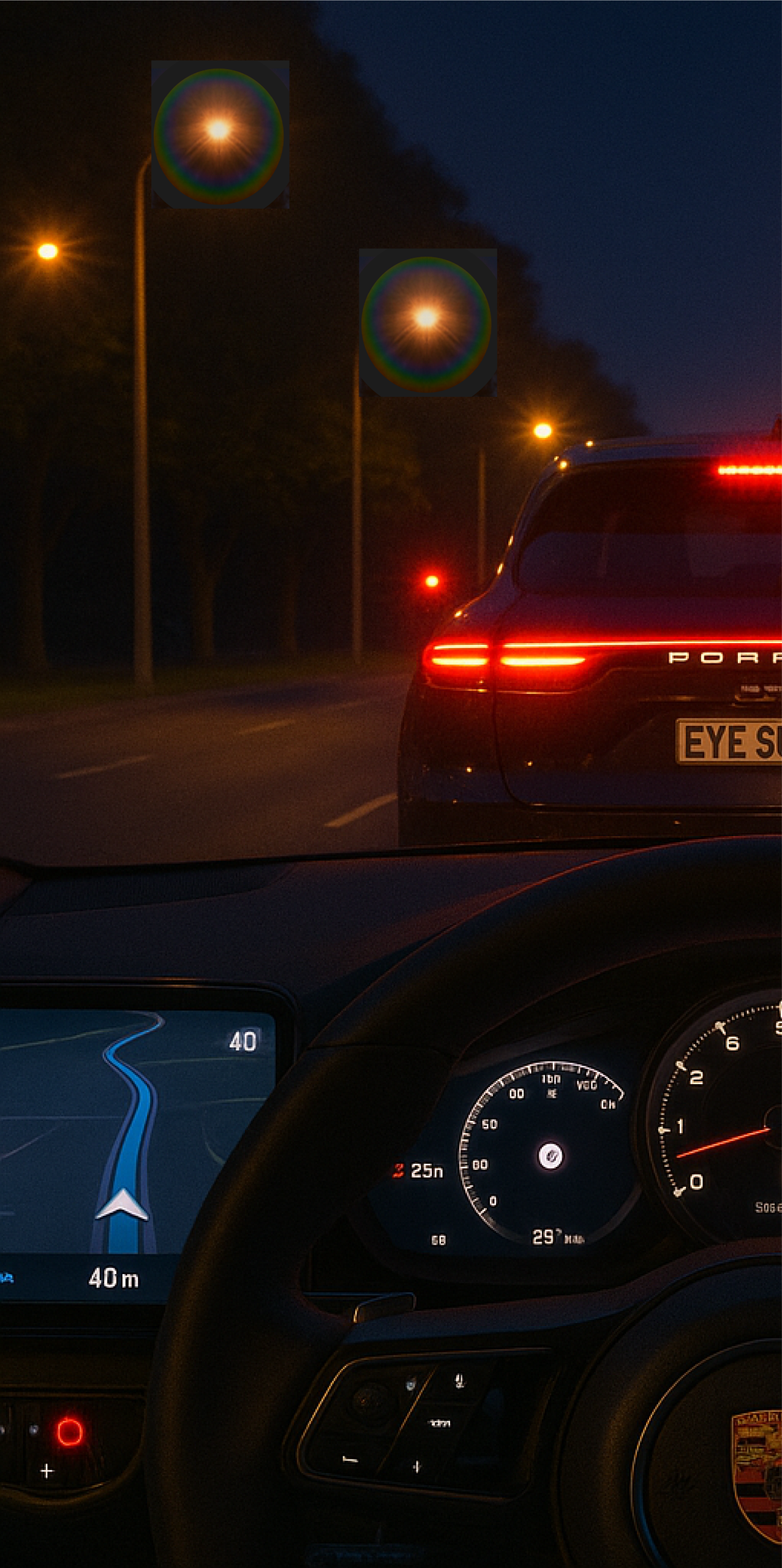
These are visual light phenomena that occur when light interacts with the different surfaces of the eye, particularly the tear film, cornea and natural lens/lens implant. These surfaces can scatter, bend, deflect or distort light waves to create these images. The vision processing centre in the brain has the ability to filter and rectify some of these phenomena over time. Rarely, if these persist, the lens implants may need to be exchanged for a different type.
Haloes + Glare
Starburst
CAN I FINANCE MY ADVANCED CATARACT REFRACTIVE SURGERY AND/OR MY LENS IMPLANT
Yes. Don’t allow costs to limit your eye health and aesthetic appearance. Tailored Finance options are available to suit your individual needs.